GoWish - Your Digital Wishlist
- 3.6
- Rating
- 1.00M
- Installs
- Free
- Price

 Analysis by App-foxy
I found GoWish while looking for a cleaner way to collect gift ideas, and it quickly made more sense than keeping scattered notes, screenshots, and browser bookmarks. This is a free shopping app from Ønskeskyen ApS built around digital wishlists: you save things you would like, organize those ideas, and share them with people who may need gift inspiration. The basic promise is simple, but the usefulness depends on how consistently you maintain your lists and how well the people around you use them.
My overall impression is that GoWish works best as a shared planning tool rather than as a conventional shopping destination. It does not replace careful product research, price comparison, or the final purchase decision. Instead, it gives a wishlist a clearer home and makes the awkward question of “what would you like?” easier to answer. If birthdays, holidays, weddings, or family gift exchanges regularly produce repeated messages and uncertain guesses, this app can remove a surprising amount of friction.
How GoWish turns gift ideas into something usable
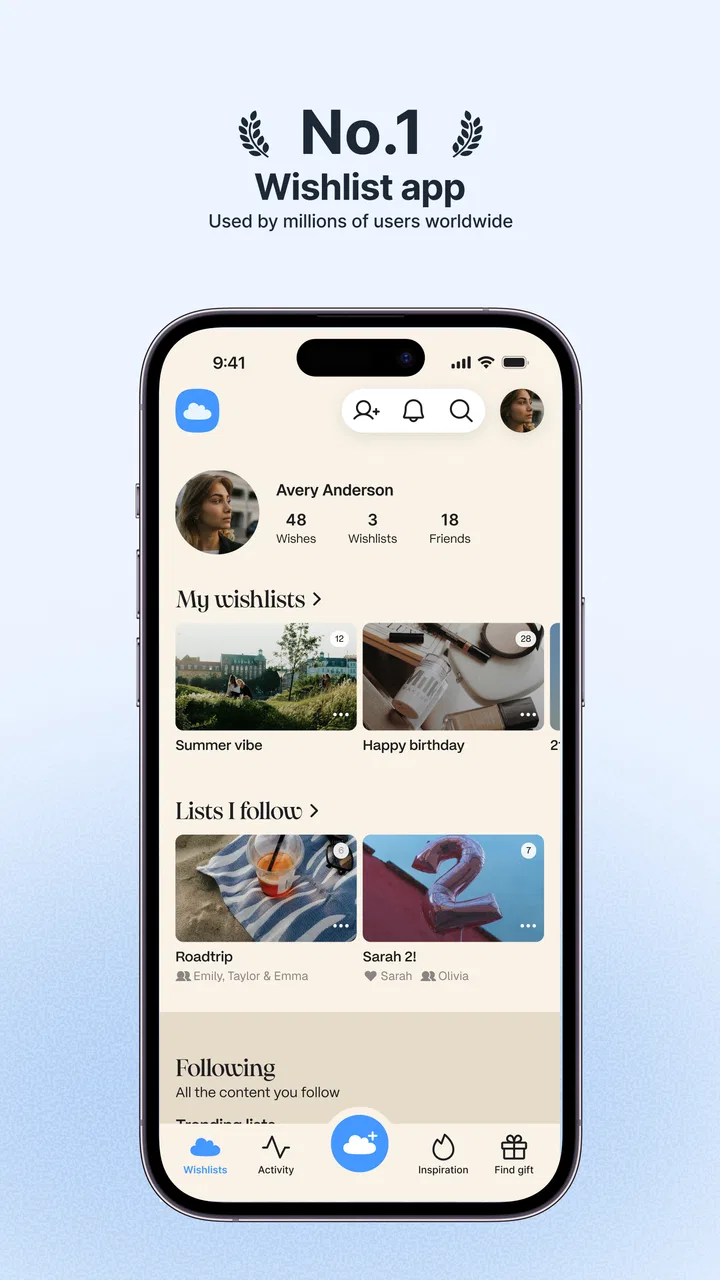
The app belongs to the shopping category, but I would describe its real role as personal gift organization. That distinction matters. You are not simply browsing a catalogue chosen by one retailer. You are building a personal collection of products and ideas, then making that collection useful to other people. The store summary presents it as a place to create wishes and find inspiration, and that matches the way I would use it: start with your own needs, then let the list become a practical guide for friends and family.
You May Also Like

 Blood Strike: 2.5 Anniversary
Blood Strike’s Loadouts Turn Every Drop Into a Tactical Gamble
A close look at Blood Strike’s custom loadouts: how fast access to signature weapons reshapes its battle royale rhythm, rewards preparation, and narrows the gap between fights.

 Pandora - Music & Podcasts
Pandora’s Music Is Easy to Start, but Harder to Recover
Pandora’s strength is its low-effort path from a seed to a station. Its weak spot is how much confidence it asks you to place in connection, setup, and quiet recovery.

 8 Ball Pool
 Is Built on Rivalries, Rematches, and Routine
A close look at the rivalries, rematches, shared routines, and unanswered safety questions that turn a quick pool match into a persistent mobile community.

 Samsung Music
’s Quiet Strength Is Playing What You Already Own
Its reach comes less from spectacle than from dependable access to a personal library. That simplicity is both the app’s strongest retention engine and its ceiling.

 AccuWeather: Weather Radar
AccuWeather Review: A Quick, Clear Forecast for Everyday Decisions
For everyday plans, the best forecast is the one you can understand quickly. AccuWeather makes rain timing, radar, and local conditions easy to act on, with a few trade-offs.

 Hill Climb Racing
Why Hill Climb Racing Still Turns Crashes Into One More Run
A tiny car, a bumpy hill and one more upgrade: Hill Climb Racing keeps resurfacing because its simple chaos makes every near-miss feel personal.
More From Our News Desk



The most useful change is psychological. When an idea appears, I can record it before I forget it instead of assuming I will remember the name later. A wishlist also gives me a place to separate immediate wants from longer-term ideas. That is more helpful than sending someone a single product link, because a list gives the recipient room to choose according to their budget, timing, and relationship with me.
GoWish is available without a purchase price, so the entry barrier is low. That makes sense for an app people may ask relatives and friends to install or use. A wishlist only becomes valuable when the people involved can access it, and a free app is easier to introduce than a paid service. The important distinction is that free access does not guarantee that every item on a list is affordable or that the eventual shopping experience will be the same for every product. The app helps organize desire; it does not make the products themselves free.
The application is rated for Teen users, which is a useful signal for households deciding whether it fits a younger user. I would still treat it as a shopping and sharing tool that deserves ordinary online judgment. A list can contain personal preferences, expensive items, or links to stores, so children and teenagers may benefit from guidance about what they share and with whom. That is not a reason to avoid the app, but it is a reason to use it thoughtfully.
A realistic way to use it during a busy week
Imagine a birthday approaching while you are working, commuting, and answering messages from relatives asking what to buy. Instead of replying separately to each person, you can build a list as ideas occur to you. One evening, you might add a kitchen item; another day, you might save something for a hobby; later, you can remove an idea that no longer feels right. When the birthday conversation starts, the list is already more useful than a rushed message containing three vague suggestions.
The same workflow suits a couple preparing for a move. Rather than creating one enormous list with no structure, you can think in groups: practical household needs, personal items, and things that would be nice but are not urgent. That separation helps other people understand your priorities. It also reduces the chance that someone buys an attractive but unsuitable item simply because it was the first thing they saw.
A less obvious benefit is that a wishlist can act as a memory aid for yourself, not just a shopping guide for others. I often forget which products caught my attention and why. Writing down a short note beside an idea—such as the preferred colour, size, or intended use—can prevent a future purchase from becoming a guessing game. The app is more valuable when the list contains enough context to be actionable, rather than being a pile of unexplained product names.
Where the value really comes from
The strongest value is coordination. A shared wishlist can reduce duplicate gifts, repeated questions, and the social discomfort of asking for something specific. It also gives the recipient more control. You can express what you actually want without demanding one exact purchase, while the giver can choose from a set of suggestions instead of searching blindly.
That makes GoWish particularly useful for people whose gift occasions involve several participants. Families, couples, friend groups, and anyone who maintains separate ideas for different events can get more from it than someone who rarely receives gifts or prefers complete spontaneity. The app has a practical advantage over a private note because the list is designed to be communicated, revisited, and used by other people.
It can also improve the quality of inspiration. A person who knows your interests can look at your list and discover the kind of items you enjoy, rather than relying only on a generic gift guide. In that sense, the most personal part of the experience is not the browsing; it is the information you choose to add. A carefully prepared list can communicate taste better than a broad category such as “books,” “fitness,” or “homeware.”
There is a useful trade-off here. The more specific your list is, the easier it becomes for someone to buy an appropriate gift. The more open-ended it is, the more room you leave for surprise. I would use a mixture: include a few precise choices for people who want certainty, then add broader ideas for people who enjoy selecting something similar. That balance makes the list feel helpful without turning it into a rigid order form.
Small habits that make the lists better
My first practical tip is to review a list before sharing it. Old ideas, unavailable products, duplicate entries, and items that no longer match your needs can make a list look careless. A quick cleanup improves the experience for everyone who opens it. This is especially important when a list has been kept for a long time and gradually turns into an archive rather than a current set of wishes.
Second, avoid adding items solely because they look appealing in the moment. Ask yourself whether the item solves a real problem, fits your space, or matches something you already own. A wishlist is most useful when it represents decisions you would genuinely be happy to receive. Otherwise, it becomes another stream of impulse shopping, only delayed until someone else pays attention to it.
Third, group your thinking around occasions or priorities rather than treating every idea equally. A person buying a gift benefits from knowing whether an item is a strong preference, a useful replacement, or simply an interesting possibility. Even when the app keeps the presentation simple, your own organization can make the list much clearer.
Finally, remember that a wishlist is not a substitute for checking the final product details. Before committing to a purchase, the buyer should still verify the current listing, size, colour, compatibility, delivery conditions, and total cost at the retailer. GoWish can point someone toward the right idea, but the last step belongs to the person making the purchase.
How it compares with familiar alternatives
The usual alternative is a note-taking app. Notes are excellent for private brainstorming and can be faster when you only need a temporary list. They are less suited to a gift process because they often lack the social context people need when choosing an item. A shared note can work, but it may become cluttered with comments, unrelated tasks, and old ideas. GoWish feels more focused because the purpose is clear from the start.
Another alternative is sending links through messages. That works for one occasion and a small group, but it becomes messy when several people ask the same question over time. Links disappear into conversations, and the recipient has to remember which suggestion was current. A dedicated wishlist gives those ideas a stable place and makes updating them more manageable.
Retailer-specific wishlists can be convenient when every desired item comes from the same shop. Their weakness is that they tie your planning to one store. GoWish is more appealing when your ideas come from different places or when the important thing is sharing a personal selection rather than shopping inside one retailer’s ecosystem. The trade-off is that a retailer’s own list may provide a smoother path from saved item to checkout, while a broader wishlist can require more attention at the final stage.
Paper lists still have a place, especially for people who dislike apps or want a simple household tradition. They are private, easy to understand, and independent of an account or device. They are also harder to keep current and share beyond the room where they are stored. I would choose paper for a small, familiar exchange and GoWish when several people need access or when ideas accumulate throughout the year.
The friction I noticed before recommending it
The app’s usefulness depends on participation. If you are the only person maintaining a list while everyone else continues asking through messages, the benefit is limited. You may still enjoy having your own organized collection, but the shared convenience appears only when recipients actually look at it and use it.
There is also a maintenance cost. A wishlist can become less trustworthy when it contains outdated ideas or lacks useful details. That is not a flaw unique to GoWish, but it is an important reality: the app does not magically keep your preferences organized. You need to revisit the list, remove what no longer fits, and explain choices when a simple product title is not enough.
Another limitation is that a wishlist can encourage people to focus on objects instead of conversations. Some gift occasions are better served by asking what someone needs, what they already have, or whether they would prefer an experience or time together. I would not use GoWish to make every celebration feel transactional. It works best as an aid to thoughtfulness, not as a replacement for it.
Price is another point where expectations should stay realistic. The app itself is free, which makes trying it easy, but the service does not turn shopping into a guaranteed bargain. If saving money is your main goal, a dedicated price-comparison tool or retailer alert may be more appropriate. GoWish is about remembering and communicating wishes; it is not the first app I would choose for tracking discounts or proving that a product is currently the cheapest option.
Who is likely to get the most from it?
I would recommend GoWish to anyone who regularly hears, “What should I get you?” and finds the question difficult to answer on the spot. It is also a good fit for people who collect ideas across multiple interests and want to keep them in one place. Parents managing family occasions, couples coordinating household needs, and friend groups that exchange gifts can all benefit from a shared reference point.
It is especially suitable for planners. If you like preparing ahead, updating preferences, and giving people options, the app can become a quiet background tool that saves effort later. The free price also makes it easier to suggest without asking others to commit financially before they know whether the workflow suits them.
I would be more cautious about recommending it to someone who wants a fully private notebook, dislikes maintaining lists, or expects the app to handle every part of shopping. A notes app may be quicker for personal reminders. A retailer’s wishlist may be better when all purchases come from one shop. A price-focused service may be better when discounts and comparisons matter more than gift coordination.
For younger users, the Teen content rating makes the app broadly approachable, but I would still encourage sensible sharing habits. A wishlist can reveal interests, personal details, and spending expectations. The best experience comes from sharing it with people you know and using it as a controlled way to communicate preferences.
What to expect from the current app
The current version is 8.1.2, and the app supports Android devices running version 7.0 or newer. That covers a wide range of devices, including older phones that may not run the newest operating systems. I would still keep the app updated when updates are available, particularly for a service whose usefulness depends on sharing and reliable access.
Its scale also suggests that this is not an obscure experiment. GoWish has passed one million installs, with an average rating of 4.0 from around eight thousand ratings and roughly three thousand reviews. I read those figures as evidence of a generally positive but not flawless experience. The rating is good enough to encourage a trial, while the gap between enthusiasm and perfection is a reminder to judge the workflow against your own habits.
What I would test first is not the size of the catalogue or the visual style. I would create one realistic list, add a handful of genuinely wanted items, and share it with one trusted person. Then I would see whether the process feels clearer than sending messages or keeping notes. That small trial reveals the app’s real value much faster than filling it with dozens of ideas.
My verdict on free value
GoWish is worth trying when your problem is gift coordination, not bargain hunting. Because access is free, there is little financial risk in testing it, and the potential payoff is practical: fewer repeated questions, better gift suggestions, and a more organized record of things you would enjoy receiving.
I would not call it essential for everybody. If your gift exchanges are rare, informal, or already handled comfortably through conversation, another app may be unnecessary. If you need sophisticated price tracking, one-store checkout, or a completely private notes system, a different tool may serve you better. The right choice depends on whether sharing and maintaining a wishlist solves a recurring problem in your life.
For me, the app earns its place when I treat it as a living list rather than a storage bin. Add ideas with enough context, remove stale entries, mix precise choices with flexible inspiration, and remind gift-givers to verify the final product details. Used that way, GoWish delivers a useful free layer between personal taste and practical shopping. It does not make gift giving automatic, but it makes the thoughtful part easier to organize.
FAQs for GoWish - Your Digital Wishlist
01What is GoWish and how does it work?
GoWish is a digital wishlist app designed to help users organize and manage their gift ideas in one convenient place. You can easily add items by browsing online stores or manually entering details. The app allows for sharing wishlists with friends and family, ensuring they know exactly what gifts you desire or need for special occasions.
02Is GoWish available on both Android and iOS platforms?
Yes, GoWish is available for download on both Android and iOS platforms. This cross-platform availability ensures that users can access their wishlists from any device, making it easy to manage and update gift ideas whether you’re on your smartphone or tablet.
03Does GoWish require an internet connection to function?
While GoWish can be used offline to view and edit your wishlist, an internet connection is required to sync changes across devices and access online store links. This ensures that your wishlist is always up-to-date and accessible from any device you're using.
04Can I share my wishlist with others who don't have the app?
Yes, GoWish allows you to share your wishlist with anyone, even if they don't have the app. You can send your wishlist via email or a shareable link, making it easy for friends and family to view your gift preferences without needing to download the application themselves.
05Are there any privacy settings to control who sees my wishlist?
Absolutely, GoWish provides robust privacy settings. You can choose to make your wishlist public, private, or visible only to selected individuals. This flexibility ensures your gift preferences are shared only with those you trust, protecting your privacy while still allowing you to receive the gifts you want.
Pros
- Easy to navigate interface enhances user experience.
- Supports adding items from any online store.
- Offers price tracking for wishlist items.
- Allows sharing lists with friends and family.
- Secure login with multiple authentication options.
Cons
- Limited offline functionality affects usability.
- Occasional syncing issues with certain stores.
- Ads can be intrusive in the free version.
- No integration with some popular payment apps.
- Limited customization for wishlist categories.

GoWish - Your Digital Wishlist
Gallery